
Flood Barriers Explained: Advantages, Disadvantages and Choosing the Right Type
Flood Barriers Explained: Advantages, Disadvantages and Choosing the Right Solution
Flood barriers can be an effective way to reduce the risk of floodwater entering a property through doors, garages, entrances and other openings.
However, there are several types of flood barrier available, and the right solution depends on the opening being protected, the expected flood depth, how quickly the barrier needs to be deployed and how the property is used.
In this guide, we explain the advantages and disadvantages of different types of flood barriers and compare the flood barrier systems available from M3 Floodtec.
What is a Flood Barrier?
A flood barrier is a physical defence used to help resist floodwater entering a property through openings such as font doors, side doors, patio doors, garages and other property access points.
Some flood barriers are manually deployed when flooding is expected, while others remain permanently installed or automatically activate when floodwater reaches them.
Choosing the right flood barrier depends on several factors, including:
- The expected flood depth
- The width and height of the opening being protected
- The amount of warning available before flooding
- How frequently the opening is used
- Whether the barrier needs to be removed after use
- Available storage space for the barrier when it’s not in use
- The level of maintenance required
- Whether the property is residential, commercial or industrial
There is no single flood barrier that is suitable for every property. The most appropriate solution is the one that fits the opening, flood risk and practical requirements of the site.
What are the Advantages of Flood Barriers?
Flood barriers can provide a practical alternative to permanent changes to a building. Depending on the type of floor barrier selected, they can:
- Help resist floodwater entering through openings
- Protect doors, garages, entrances and other access points
- Be removed when they are not required
- Provide a relatively unobtrusive flood resilience measure
- Be designed to suit different opening sizes and flood depths
- Offer either manual or automatic deployment
- Be used alongside other flood resilience measures
However, manually deployed flood barriers do require preparation. They need to be accessible, correctly stored and installed before floodwater reaches the property.
Flood Defender Barrier
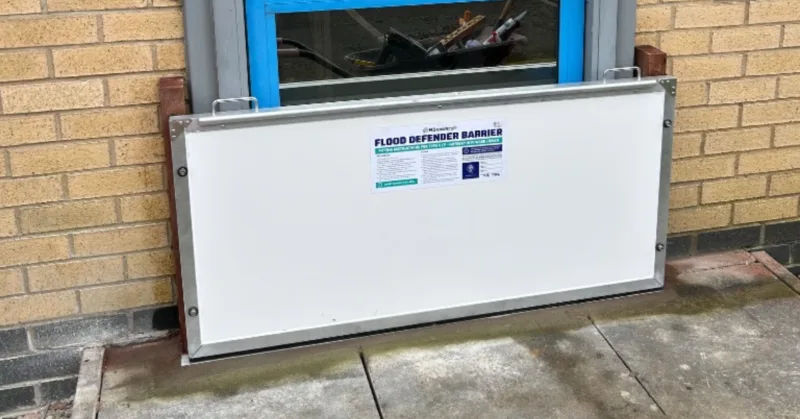
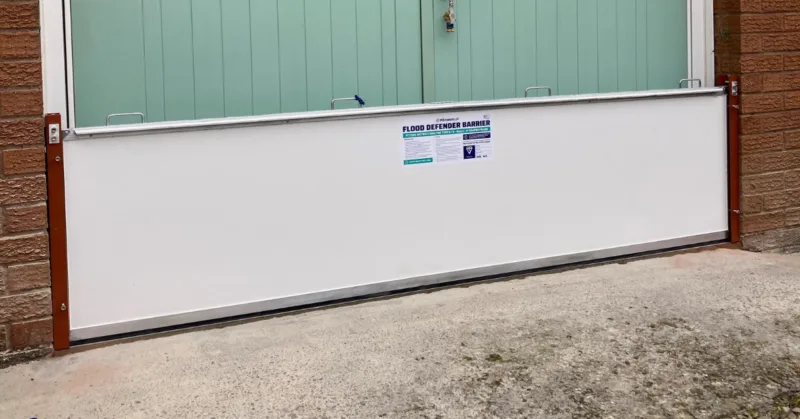
The M3 Floodtec Flood Defender Barrier is a lightweight, removable flood board designed to protect doors, garages, entrances and other openings in both residential and commercial properties.
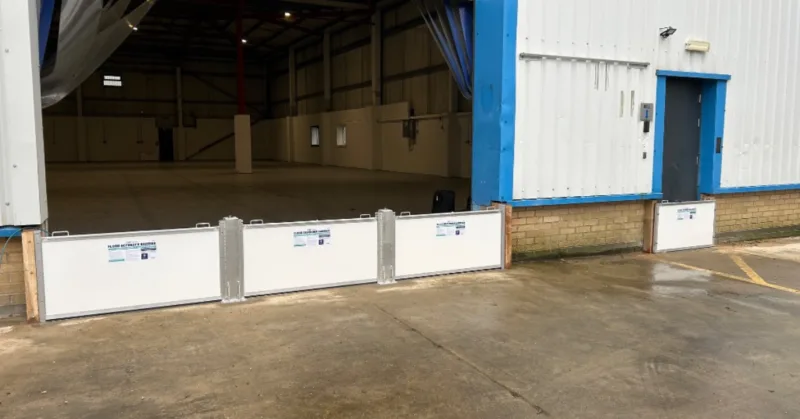
It is generally used as a single flood board across an opening, although multiple boards can be used lengthways to protect wider openings (Flood Defender Wall). Each board can be manufactured to a maximum width of 1500mm and a maximum height of 1000mm.
The barrier uses a sealed aluminium frame and EPDM rubber seals, with a range of fixing options available to suit different property types. The system is BSI Kitemark Certified and tested to BS 851188.
Advantages of the Flood Defender Barrier
- BSI Kitemark Certified and tested to BS 851188
- Lightweight and easy to deploy
- Bespoke sizes available, with individual boards up to 1500mm wide and 1000mm high
- Multiple boards can be installed lengthways to protect wider openings, creating a Flood Defender Wall
- Suitable for residential and commercial properties, including single and double doors, garages, and pedestrian or vehicle access points
- Suitable for inward and outward opening doors, subject to safe means of escape
Disadvantages of the Flood Defender Barrier
- Must be manually deployed before flooding
- Larger boards may require more than one person to handle
- Requires suitable storage when not in use
- Requires periodic maintenance and should be checked and cleaned after use
- Fixing rails remain permanently installed at the opening
When is a Flood Defender Barrier Most Suitable?
The Flood Defender Barrier is particularly suited to single and double doors, garages and pedestrian or vehicular entrances where a removable barrier is appropriate and the required protection height can be achieved with a single board of up to 1000mm high.
Stop Log Barrier System
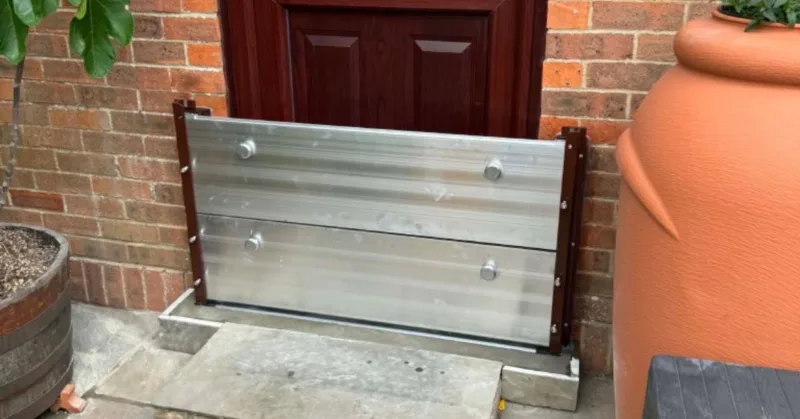
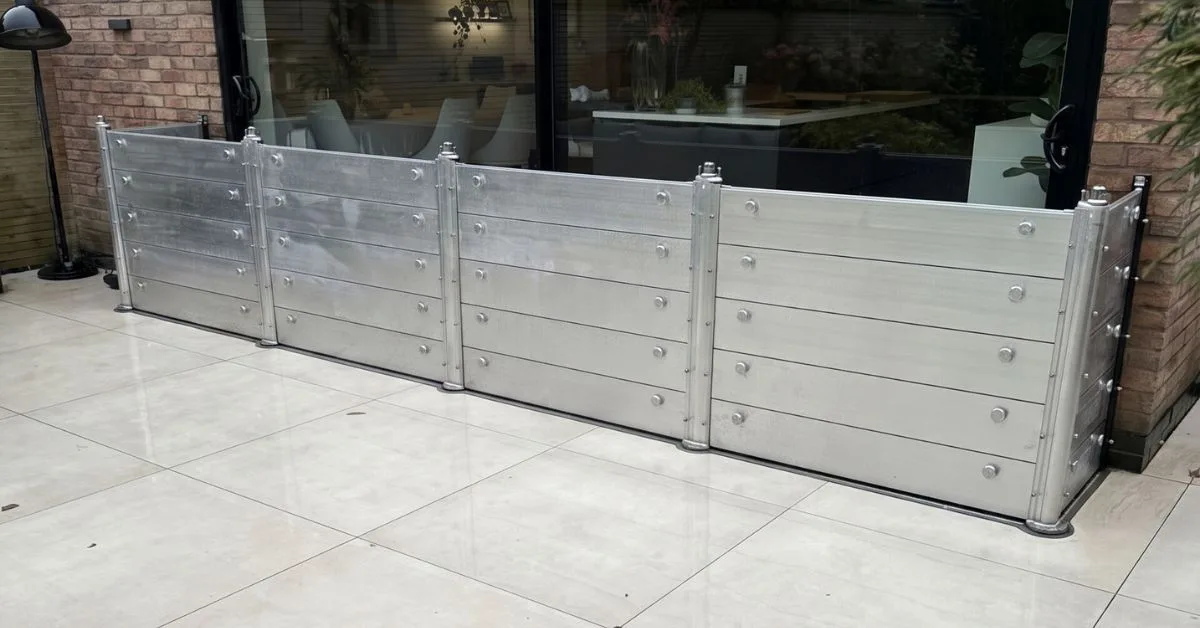
Stop Log Barriers are another removable solution for protecting doors, garages, entrances and other openings. They can be used for many of the same applications as Flood Defender Barriers, but the two systems differ in how the barrier is constructed.
Rather than using one main flood board, a Stop Log Barrier uses multiple stacking boards, or logs, which are also slotted between permanently installed rails on the property.
This gives the system greater flexibility when it comes to barrier height. Individual panels can be supplied at either 200mm or 300mm high and stacked to achieve the required overall protection height. Each panel can also be manufactured up to 1500mm wide.
Advantages of Stop Log Barriers
- Tested to BS 851188
- Lightweight and easy to deploy
- Greater flexibility in protection height, with 200mm or 300mm panels that can be stacked to achieve the required height
- Smaller panels can make handling easier
- Suitable for residential and commercial properties, including single and double doors, garages, and pedestrian or vehicle access points
- Suitable for inward and outward opening doors, subject to safe means of escape
- Made from corrosion-resistant aluminium
Disadvantages of Stop Log Barriers
- Must be manually deployed before flooding
- Deployment can take longer due to the multiple panels required
- Requires storage when not in use
- Requires periodic maintenance and should be checked after use
- Side rails remain permanently installed at the opening
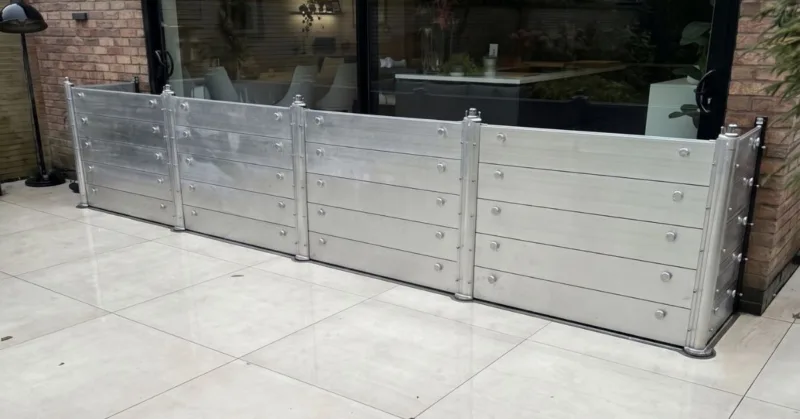
When is a Stop Log Barrier Most Suitable?
Stop Log Barriers are particularly useful where greater flexibility in protection height is required. They can be a practical choice for doors, garages and other openings where the required barrier height may vary or where a higher barrier is needed.
Flood Defender Barrier vs Stop Log Barrier: What’s the Difference?
Flood Defender Barriers and Stop Log Barriers are designed to protect many of the same types of openings. The main difference is how the barrier is constructed and the flexibility it provides in height.
A Flood Defender Barrier generally uses one flood board across the opening, with individual boards available up to 1000mm high. A Stop Log Barrier uses multiple 200mm or 300mm stacking panels, allowing greater flexibility where a higher protection level is required.
Both systems can be used to protect wider openings by installing multiple sections lengthways.
In simple terms, if one Flood Defender Barrier board provides the required protection height, it may be the straightforward option. If greater flexibility or height is required, a Stop Log Barrier may be more suitable.
| Feature | Flood Defender Barrier | Stop Log Barrier |
|---|---|---|
| Main construction | Single flood board | Multiple stacking boards |
| Maximum individual board/panel width | 1500mm | 1500mm |
| Maximum height | Up to 1000mm per board | Flexible height using multiple 200mm or 300mm panels |
| Wider openings | Multiple boards can be installed lengthways | Multiple panels/sections can be installed lengthways |
| Deployment | Manual | Manual |
| Height flexibility | Up to 1000mm per board | Greater flexibility |
| Handling | Larger single board | Smaller individual panels |
| Typical applications | Doors, garages and entrances | Doors, garages and entrances |
| Residential use | Yes | Yes |
| Commercial use | Yes | Yes |
Flood Defender Swing Barrier
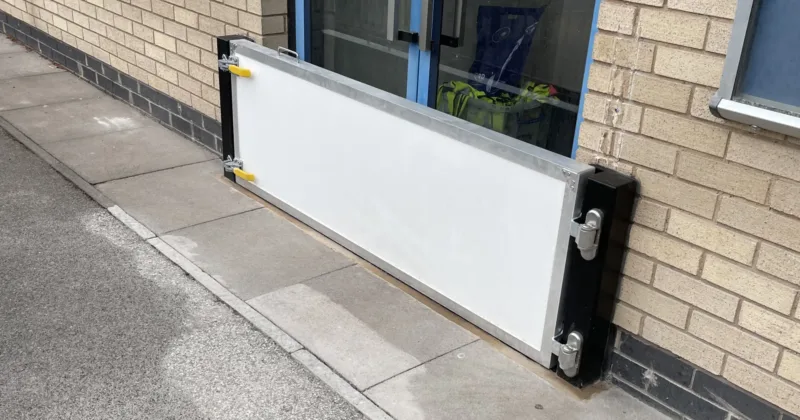
The Flood Defender Swing Barrier provides a different approach to manual flood protection. Instead of removing and storing a barrier, the flood board remains attached to the property and swings into position when required.
It can be manufactured to bespoke sizes up to 2500mm wide and 1200mm high and can be deployed in less than 10 seconds by one person. It is suitable for applications including single and double doors, fire escapes, garages, shop accesses and pedestrian gateways.
Advantages of the Flood Defender Swing Barrier
- Can be deployed in less than 10 seconds
- Designed for one-person deployment
- Remains attached to the property, so there is no separate barrier to retrieve before deployment
- No storage required when not in use
- Available in bespoke widths up to 2500mm and heights up to 1200mm
- Suitable for single and double doors, including fire escape openings
- Well suited to frequently used entrances where quick deployment is important
Disadvantages of the Flood Defender Swing Barrier
- Permanent installation is visible
- Requires sufficient space for the barrier to swing into position
- The opening must be suitable for the swing mechanism
When is a Swing Barrier Most Suitable?
A Swing Barrier is particularly useful for frequently used entrances where quick deployment is important, including doors, fire escapes, garages and commercial access points.
Flood Defender Wall
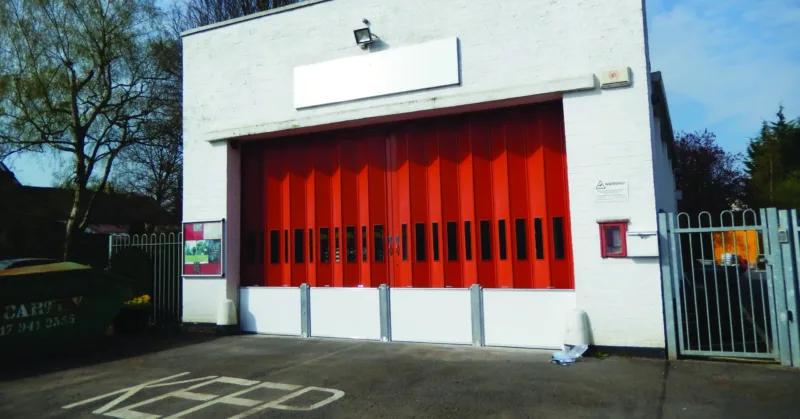
The Flood Defender Wall is created by using multiple Flood Defender Barriers lengthways, allowing wider openings to be protected than can be covered by a single board.
The same Flood Defender Barrier boards can therefore be used across a series of sections to create a wider flood defence. Wider openings can also be protected using multiple Stop Log Barrier sections, with the added flexibility of a stacked system where greater protection heights are required.
Advantages of Flood Defender Wall Systems
- Can protect wider openings than a single Flood Defender Barrier board
- Uses the same Flood Defender Barrier system across multiple sections
- Suitable for larger garages, loading bays and other wide access points
- Can be configured to suit the width of the opening
- Can be removed when flood protection is not required
Disadvantages
- Requires more components than a single barrier installation
- Must be manually deployed
- Requires storage when not in use
- Wider systems can take longer to install
- Permanent posts or fixing points remain in place
When is a Flood Defender Wall Most Suitable?
Flood Defender Wall systems are particularly suited to wide openings where a single flood barrier cannot provide sufficient coverage, including larger commercial and vehicular access points.
Self-Activating Flood Barrier
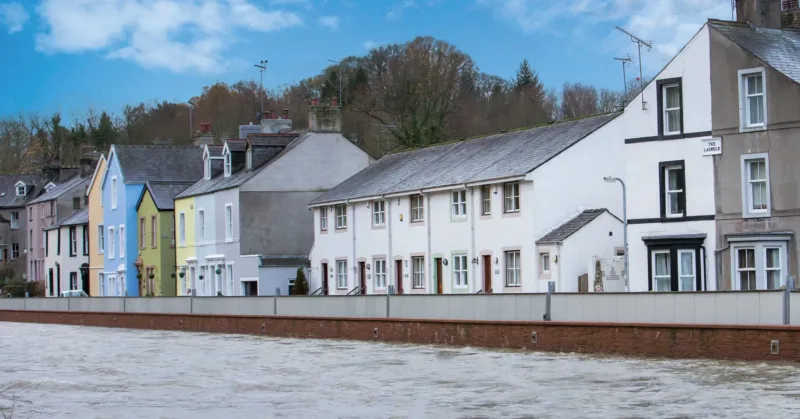
The Self-Activating Barrier (SAB) is designed for situations where manual deployment is impractical or where there may be little warning before flooding occurs.
Installed below ground, the barrier remains hidden during normal conditions. When floodwater reaches the system, the incoming water provides the energy needed to raise the barrier automatically.
No electricity, people or warning system are required for deployment. The system can be installed to lengths from 1 metre to continuous lengths exceeding 1000 metres, making it particularly suited to larger sites and infrastructure projects.
Advantages of the Self-Activating Barrier
- Deploys automatically when floodwater reaches the barrier
- Does not require manual intervention
- No electricity is required for deployment
- No flood warning system is required
- Remains hidden below ground during normal conditions
- Allows normal traffic and pedestrian flow when not activated
- Can protect very long areas, with systems available from 1 metre to continuous lengths exceeding 1000 metres
Disadvantages
- Higher initial investment than manually deployed systems
- Requires specialist design and installation
- Generally more suited to larger projects
- Underground installation requires greater construction work
When is a Self-Activating Barrier Most Suitable?
Self-Activating Barriers are particularly suited to infrastructure, commercial developments, communities and public spaces where large areas need protection and manual deployment would be impractical.
Flood Defence Glass Wall Barriers
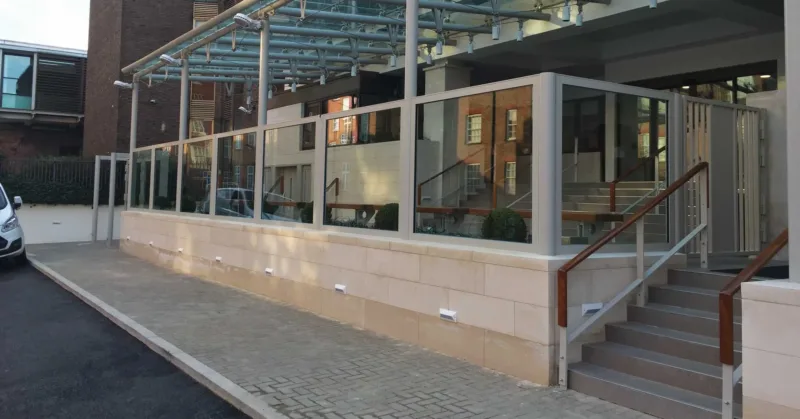
Flood Defence Glass Wall Barriers provide a permanent flood defence while maintaining views and natural light.
The system uses specialist glass with robust aluminium or stainless-steel framing. Unlike removable flood barriers, there is no need to deploy the system when flooding is expected, making it a practical option where permanent protection is preferred.
Advantages
- Permanent flood defence with no manual deployment required
- Maintains views and natural light
- Provides an attractive architectural finish
- Suitable for residential and commercial properties
- Available as single-frame or modular systems
Disadvantages
- Higher initial installation cost
- Requires professional design and installation
- Only suitable for appropriate site layouts
- Permanent rather than removable
When is a Flood Defence Glass Wall Most Suitable?
Flood Defence Glass Wall Barriers can be particularly effective for riverside properties, waterfront developments, hotels, restaurants and other locations where maintaining views is important.
Comparing M3 Floodtec Flood Barriers
Different flood barriers solve different problems. The table below provides a quick comparison of the main M3 Floodtec systems.
| Flood barrier | Deployment | Height flexibility | Typical application |
|---|---|---|---|
| Flood Defender Barrier | Manual | Up to 1000mm per board | Doors, garages and entrances |
| Stop Log Barrier | Manual | Greater flexibility using stacking panels | Doors, garages and entrances where greater height is required |
| Flood Defender Swing Barrier | Manual | Up to 1200mm | Doors, fire escapes and frequently used entrances |
| Flood Defender Wall | Manual | Configured to the site | Wide entrances, garages and loading bays |
| Self-Activating Barrier | Automatic | Bespoke | Infrastructure and large-scale sites |
| Flood Defence Glass Wall | Automatic | Bespoke | Riverside and waterfront properties |
Which Flood Barrier is Right for You?
The right flood barrier depends on the property, the opening and the way the area is used.
For a single or double doorway: a Flood Defender Barrier or Stop Log Barrier may be suitable.
For a garage: either a Flood Defender Barrier or Stop Log Barrier can be used, depending on the required protection height and opening dimensions.
For a higher barrier: a Stop Log Barrier provides greater flexibility because its panels can be stacked to achieve the required height.
For a wider opening: multiple Flood Defender Barriers can be installed lengthways to create a Flood Defender Wall. Multiple Stop Log Barrier sections can also be used where the flexibility of a stacked system is preferred.
For a frequently used entrance: a Flood Defender Swing Barrier can be deployed in seconds without needing to retrieve and install a separate barrier.
Where manual deployment isn’t practical: a Self-Activating Barrier can provide automatic flood defence without requiring people, power or a warning system.
Where permanent protection and clear views are important: a Flood Defence Glass Wall Barrier can provide a more architectural solution.
Are Flood Barriers Worth It?
For properties at risk of flooding, flood barriers can be an important part of a wider flood resilience strategy. However, a barrier should not be selected based on cost or appearance alone.
The opening, expected flood depth, deployment requirements and wider flood risk should all be considered. It is also important to understand how the barrier needs to be stored, maintained and deployed before it is needed.
For some properties, a removable barrier may be the most practical choice. For others, a permanently installed or automatically activated system may provide a better fit.
Flood Barriers: Frequently Asked Questions
What is the best type of flood barrier?
The best flood barrier depends on the individual property and which solution is most suitable for the opening size, required protection height, flood risk, available warning time and how the property is used. When choosing a flood barrier, it is also important to consider how the product has been tested and whether it meets the latest relevant British Standard. M3 Floodtec’s Flood Defender Barrier and Stop Log Barrier are tested to the relevant requirements of BS 851188, giving you added confidence that the products have been independently assessed against recognised performance requirements.
What is the difference between a Flood Defender Barrier and a Stop Log Barrier?
Both systems can be used to protect the same types of openings, including doors, garages and pedestrian or vehicle access points. The main difference is how the barriers are constructed. A Flood Defender Barrier generally uses one flood board, with a maximum height of 1000mm, while a Stop Log Barrier uses multiple 200mm or 300mm panels that can be stacked to achieve greater protection heights. Both systems can be used across wider openings by installing multiple sections lengthways.
How high can a Flood Defender Barrier be?
M3 Floodtec Flood Defender Barriers can be manufactured to heights of up to 1000mm per board. Individual boards can be manufactured up to 1500mm wide.
How high can a Stop Log Barrier be?
Stop Log Barriers use individual 200mm or 300mm high panels that can be stacked to achieve the required protection height. This provides greater height flexibility than a single-board Flood Defender Barrier.
Can a flood barrier protect a garage?
Yes. Flood Defender Barriers and Stop Log Barriers can both be used to protect garage openings. The most suitable system will depend on the required protection height and the dimensions of the opening.
Can flood barriers protect wide openings?
Yes. Multiple Flood Defender Barriers can be positioned lengthways using demountable posts to create a Flood Defender Wall. Stop Log Barrier systems can also be configured across wider openings using multiple sections.
Do flood barriers have to be removed after a flood?
Removable systems such as Flood Defender Barriers and Stop Log Barriers are intended to be deployed when required and removed afterwards. Following a flood event, barriers should be cleaned, inspected and maintained in accordance with the manufacturer’s instructions. Other systems, such as Self-Activating Barriers and Flood Defence Glass Wall Barriers, provide passive or automatic protection and do not need to be manually deployed or removed after flooding.
Do flood barriers work automatically?
Some do. M3 Floodtec’s Self-Activating Barrier uses incoming floodwater to automatically raise the barrier. It does not require people, electricity or a warning system to deploy. Flood Defence Glass Wall Barriers also provide passive protection, remaining permanently installed and requiring no manual deployment when flooding is expected.
Are flood barriers permanent?
It depends on the system. Flood Defender Barriers and Stop Log Barriers are removable, although their fixing components remain installed. Swing Barriers remain attached to the building but are folded away when not required. Self-Activating and Glass Wall systems provide permanent flood defence.
How do I choose the right flood barrier?
Start by considering the opening you need to protect, the expected flood depth, how quickly the barrier needs to be deployed and how the area is used day to day. M3 Floodtec can assess the application and recommend an appropriate flood barrier system.
Choosing the Right Flood Barrier
Flood barriers can play an important role in reducing the impact of flooding, but the most suitable solution will depend on the individual property and its flood risk.
For smaller openings, a Flood Defender Barrier may provide a straightforward removable solution, while Stop Log Barriers offer greater flexibility where different protection heights are required. Wider openings can be protected using multiple barrier sections, while Swing Barriers provide rapid deployment for frequently used entrances.
For larger sites or locations where manual deployment is impractical, automatic or permanent systems such as the Self-Activating Barrier and Flood Defence Glass Wall can provide an alternative approach.
At M3 Floodtec, we supply and install a range of flood barrier systems for residential, commercial, industrial and infrastructure applications. Our team can help you assess the opening, flood risk and practical requirements to identify the most appropriate solution.
Looking for the right flood barrier for your property? Contact M3 Floodtec to discuss your requirements.
Get in Touch
